

A nonprofit should run both donor and program ads, budgeted apart. Appeals name a need and ask now. Program stories show what the money did, and they make every later ask cheaper.
- Google Ad Grants: up to $10,000 a month in free search ads for eligible nonprofits. Claim it first.
- Cost: $0.74 a click and $12 a conversion across 3 nonprofit accounts we run, the cheapest clicks we track.
- Longest runner: the ASPCA's rescue report, 871 days with no donate button anywhere.
- Big charities: each job gets its own ad: walks, gifts in wills, monthly giving, goods drop-offs.
- Source: 17 real ads from the Meta Ad Library, 11 from major charities, run times current to September 27, 2026.
Meta publishes no performance data for commercial ads, so run time is the honest public signal — a charity does not keep buying an appeal that costs more than it raises. Every card links to its source ad.
Nonprofit is also the cheapest advertising we manage by every measure, which changes the math of what is worth running — numbers below, then the gallery, close readings, AI prompts, and the rest of the ad examples library.
How these 17 were chosen
The 11 major-nonprofit ads came from a pull on September 27, 2026: the Ad Library pages of 28 of the largest charities in the US and Canada — St. Jude, the Red Cross, UNICEF USA, the ASPCA, SickKids, the Canadian Cancer Society and others — active ads only.
We read the longest-running ads on each page and kept 1 per organization, chosen so that no two do the same job.
That brings us to...
The other 6 came from 1 Ad Library search on August 27, 2026 — donate, US, active only — sorted by run time, then split deliberately: 3 donor-focused appeals (crisis relief, community-specific, faith-rooted) and 3 program-focused stories (a burn foundation's camp, a state initiative, a children's hospital).
Keyword noise was heavy — phone accessories and health spam also bid on "donate" — which says something about the neighborhood your ads run in.
All 17 were rechecked on September 27, 2026. 3 of the original 6 have stopped running since August; their cards keep the full run, start to finish.
What a nonprofit click costs before you copy anything
Ad examples tell you what to make, not what results cost. Here is that half — our own ChatGPT Ads accounts beside the published Google and Facebook averages.
| Platform | Cost per click | Cost per lead |
|---|---|---|
| Google Search | $5.42○ | $67○ |
| Meta / Facebook | $1.92○† | $27.66○† |
| ChatGPT Ads | $0.74● | $12● |
| Google Search | CA$4.56○△ | CA$56○△ |
| Meta / Facebook | CA$2.05○†△ | CA$29.60○†△ |
| ChatGPT Ads | Not split by country | |
● Our own managed accounts. ○ LocaliQ & WordStream's published averages — a published benchmark, not a Bytown measurement. Search comes from their 2026 search benchmarks; Facebook from their 2025 Facebook edition, published 2025-10-24 — their 2026 refresh covers search only, so treat the Facebook rows as roughly a year old and directional. † LocaliQ publishes no lead-campaign row for this industry, so the Facebook figures are their all-industry average. △ Canadian figures are estimates: search scales by our own Canada/US bid ratio, Facebook by one market-level factor Superads measures. Neither is a published Canadian benchmark, because none exists.
Full method and a budget calculator for each: Google Ads costs · Facebook Ads costs · ChatGPT Ads benchmarks.
The ChatGPT figures are ours: 3 nonprofit accounts, 6 account-months and $4,007 in spend, May through July 2026, at a 3.06% click-through rate with 6.09% of clicks converting — the cheapest clicks and second-cheapest conversions of the 14 industries we track on ChatGPT Ads.
At $12 a signup, ads that would never pay for a business pay easily for a cause. Full table with sample sizes: ChatGPT Ads cost benchmarks.
The Facebook row is the all-industry average — no nonprofit category is published — and the Google figure is worth less than it looks: eligible nonprofits get up to $10,000 a month of free search advertising through Ad Grants before paying for a click at all. Claim that first.
A search lead and a Facebook lead are not the same object — search catches someone already looking, while a Facebook lead form arrives pre-filled from a profile in one tap. Read the two as prices for different things, not a league table.
The gallery: 17 nonprofit ads that have earned their budget
Run times are day counts to the September 27, 2026 Ad Library snapshot. An ad that has stopped shows its full run, start to finish.
Major North American nonprofits: the jobs big budgets split out
Here's where it gets interesting:
The largest charities in the US and Canada do not stop at ask versus story. Their longest-running ads split the work further — monthly giving, gifts in wills, walks, goods drop-offs, even recruiting the people they serve — and each job gets its own creative.
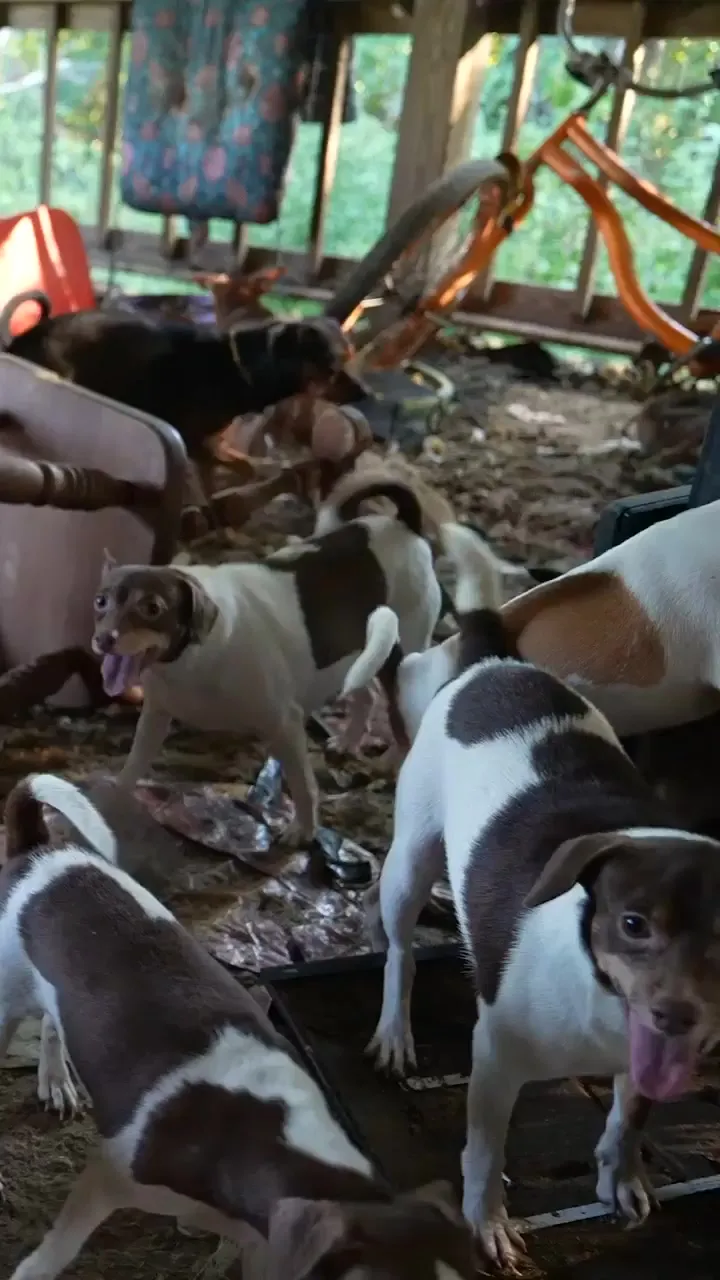
A rescue report, not a request. Dogs crowd a filthy, cluttered room; the headline is "Learn More About Our Rescue in Louisiana."
Read moreRead less
The copy says only that the ASPCA was "on the ground assisting in the rescue of dogs and cats living in filthy and dangerous conditions," and the button opens the news story about that rescue. There is no donate button anywhere in the ad.
This is the longest-running ad on the page, 242 days ahead of the next one. Proof of work is the program story at its most literal: here is what we did. A reader who finishes that story meets the next appeal already convinced the organization shows up.
Takeaway: report your work like news. An ad that links to a story can run for years; an appeal wears out.
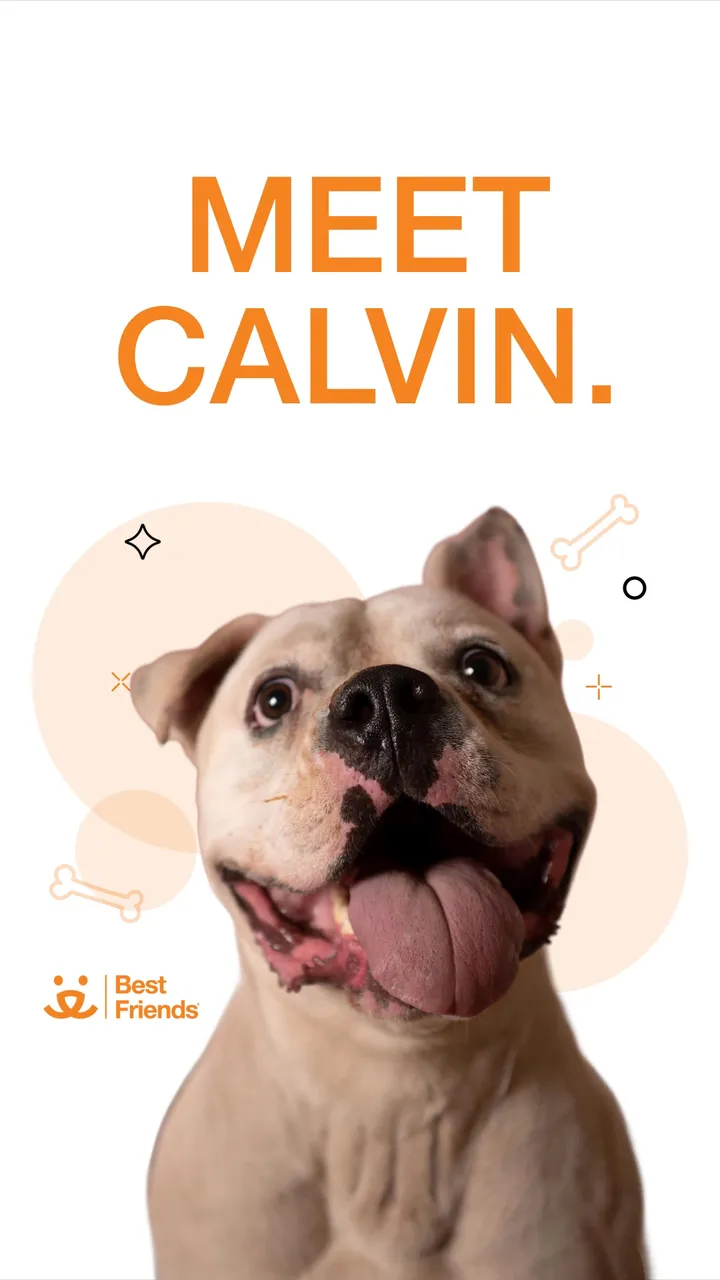
One named dog sells a subscription. "Meet Calvin." — a grinning dog on a clean orange-and-white card.
Read moreRead less
The copy gives Calvin a personality ("googly eyes, goofy energy, and total love for peanut butter"), credits monthly donors with giving him his chance, and only then asks: give each month to help more pets "go from overlooked to overjoyed."
The destination link is tagged as a sustainer campaign — this ad exists to sell monthly giving, not a one-off gift, and it introduces the beneficiary before it mentions money.
Takeaway: sell monthly giving through 1 named beneficiary the donor has already met — the same one-person rule as Al Isharah below, applied to a subscription.

A joke that fills a donation truck. A small dog stares down a robot vacuum: "Peace and quiet is a GOOD REASON to donate."
Read moreRead less
The headline is "Any reason is a good reason," the copy is 1 line — "Because you know you’re keeping the dog." — and the button goes to a page for dropping off used goods. Meta groups 16 live ads under this creative.
Asking for stuff is a different job from asking for money: the donor is decluttering, not sacrificing. Humor fits that job in a way it never would in a crisis appeal.
Takeaway: match the tone to the ask. A goods donation is a favor to the giver, so the ad can be light.

An ad that asks for a signature, not a dollar. An airmail postcard from Guatemala quotes MSF health promoter Rosinés Pérez above a red "Sign the card" button.
Read moreRead less
The headline is "Send a note of thanks to our staff!" and the copy invites people to add their name — and a note if they like — to a card for the teams that "deliver emergency care in over 75 countries." Nothing is asked for except a name.
A signature is a small yes, and small yeses are what lists are built from. The next appeal then reaches someone who has already done something for the cause, instead of a stranger.
Takeaway: run a no-cost action with real emotional pull — thanking staff, signing a card — to grow the list your appeals will need.

The crisis appeal, done with restraint. Tagged "Gaza," a mother feeds her young son from a food sachet under the line "Help UNICEF deliver life-sustaining aid to children in crisis."
Read moreRead less
The headline "Send essential aid to children in need." and the copy name exactly what a gift does — "nutrition and life-sustaining supplies" — and a location pin says where. The image carries the urgency; there is no countdown and no alarm graphics.
The link’s campaign tag reads "emerging donors": this is aimed at newer givers, and it is quiet.
Takeaway: a real place, a real act of care and 1 concrete deliverable are enough — the same restraint as the Rowad ad below.

The origin story as a donation ask. A drilling rig blasts water and rock into the air while a crew in hard hats looks on.
Read moreRead less
The headline is "Water changed his life, then millions of others." One version of the copy tells the founding story: "It all started in 2006, when one person decided to do something. 18 years later, 18 million people now have access to clean water." The button leads to The Spring, charity: water’s monthly-giving program.
An origin story works as an appeal when it ends in a number that proves the idea worked — one person, then millions. The rig is the program caught mid-action; the story is the reason to join.
Takeaway: if your founding story ends in a verifiable result, it may be your best monthly-giving creative.

Asking for a gift in a will. A family snapshot captioned "Christopher Wilson with his mom (Legacy Donor)" sits above a yellow panel: "Learn more about leaving a gift in your will."
Read moreRead less
The headline is "Legacy Gifts For Cancer Research," and the copy asks people to "consider leaving a legacy" that can "help shape a more hopeful future for generations of Canadians." The button opens the society’s gifts-in-wills page. There is no amount and no deadline — a bequest is decided over months, so the ad only has to open the conversation.
Gifts in wills are among the largest gifts a charity receives and among the least advertised. A real legacy donor’s family photo makes a lawyer’s-office decision feel personal.
Takeaway: advertise the ask nobody advertises. A gift in a will needs "Learn more", not "Donate now".

Advertising to the people the charity serves. The Wounded Warrior Project logo under 1 line: "No-cost support is just a click away."
Read moreRead less
The headline is "Post-9/11 Veterans Join Now," and the copy invites veterans to "access life-changing programs and services." The button opens a sign-up form for warriors. Nobody is asked for money — this ad fills the program.
Programs only work if the right people enroll, and Meta reaches them as efficiently as it reaches donors. "No-cost" answers the first objection before anyone raises it.
Takeaway: if your programs have empty seats, part of the budget belongs to recruiting the people you serve, not only donors.

A gift shop where every purchase is a donation. A bamboo utensil set in a WWF-branded pouch — one card of a rotating catalog ad.
Read moreRead less
Meta rotates products from WWF’s gift center through the ad — the utensil set, an axolotl backpack, animal puppets, keychains, a climate-heroes kit — each carrying the same line: "Every donation to WWFGifts supports global conservation efforts to protect threatened species and their habitats."
The donor gets a thing, the charity gets a donation, and the ad runs like a retailer’s catalog, with the same automatic product matching. It suits gift seasons and people who are not ready to give without getting something back.
Takeaway: a symbolic gift turns a donation into a present — let a product catalog sell it.

Recruit fundraisers, not donors. Walkers in St. Jude T-shirts cheer with yellow pom-poms under "Register today! Take steps to cure childhood cancer."
Read moreRead less
The copy is local: "The St. Jude Walk is coming to Charlotte on October 10, 2026. Walk with us…" The link’s tracking tags mark it as 1 city’s ad in a peer-to-peer set, so each market gets its own date and place.
A registration is worth more than a single gift: every walker then asks their own friends and family, who trust them more than they trust any ad.
Takeaway: 1 registration buys you a fundraiser with a network. Localize the date and city, and let the walkers do the asking.
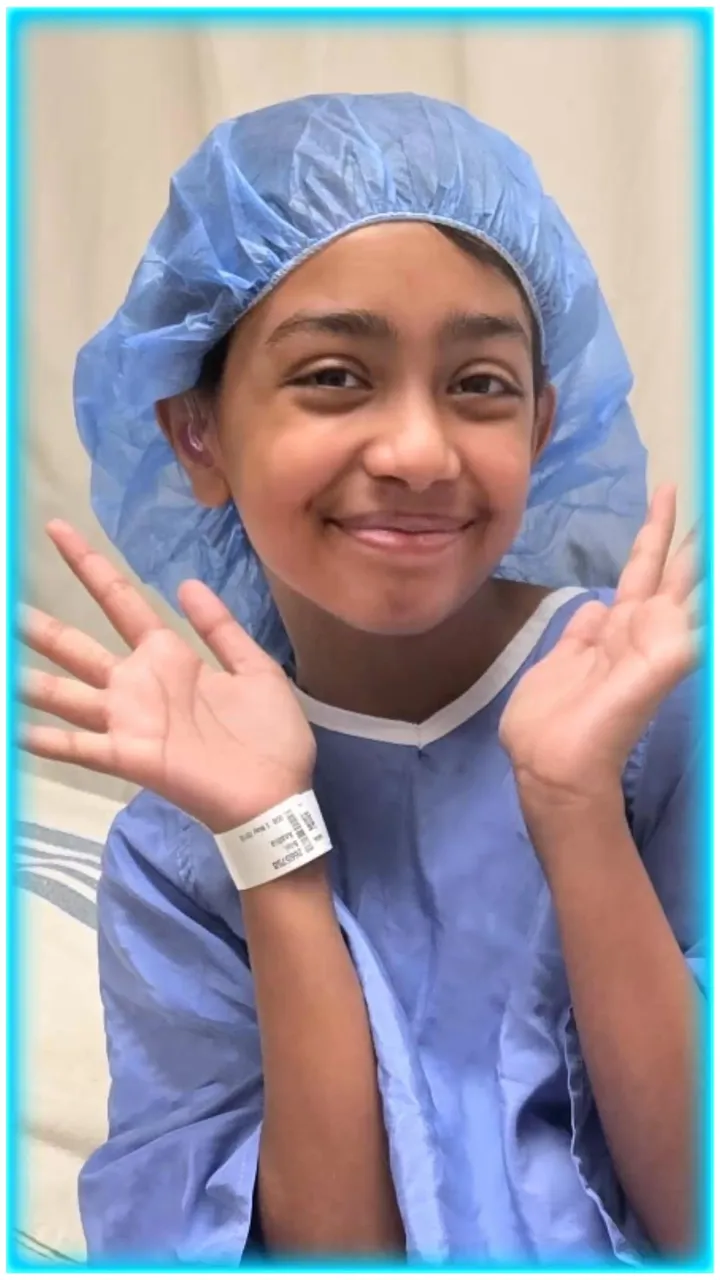
The second ad, for people who already looked. A young patient in a surgical cap and hospital bracelet frames her smile with both hands.
Read moreRead less
The headlines alternate "Become a monthly donor" and "Donate monthly for kids like Anabia," and the shortest copy is 5 words: "Join the fight every month." The link’s tracking tags mark it as an always-on retargeting ad, shown to people who have already engaged with SickKids.
Because this audience already knows the hospital, the ad skips the introduction and goes straight to the monthly ask. The long story is for strangers.
Takeaway: keep a short, always-on monthly ask running for your warm audience, separate from the ads that introduce you.
Smaller charities, donor-focused: ads that ask
The 6 smaller organizations in the next 2 groups keep ask and story strictly apart — watch how disciplined the split is.

One person carrying the cause. A presenter signs "My name is Yaseen" in British Sign Language against a starfield.
Read moreRead less
The appeal makes silence literal — years of Fridays without hearing the call to prayer — then presents the organization as the thing that changed it. One named person carries the entire cause.
Takeaway: 1 named beneficiary moves donors more than any 1,000-person statistic.

The community’s own vocabulary. A khutbah clip carries the appeal — the sermon format first, the ask second.
Read moreRead less
The ad speaks inside its community’s own register and ties the donation to concrete physical relief — a tent, blankets, a hot meal — needs a donor can picture exactly.
Takeaway: concrete needs stated in a shared vocabulary is the donor-appeal formula.

The appeal that respects its subject. A girl carries her doll across a debris-strewn street in Gaza.
Read moreRead less
No siren graphics, no red arrows — the scene carries its own weight, and the copy ("Your plate is full. Theirs are empty.") does the asking.
Crisis fundraising has a dignity problem, and this ad mostly solves it: the child is a person in a place, not a prop. The copy line works because it puts the viewer in the sentence — your plate — which is what turns sympathy into an action that is about you, not just them.
Takeaway: put the donor inside the sentence, and let real scenes carry their own urgency.
Smaller charities, program-focused: ads that show the work

Strengths, not pity. A young burn survivor grins from a camp chair in the sun.
Read moreRead less
The organization's copy describes the kids in its community as "more than burn survivors."
The oldest of the 6 smaller-charity ads refuses the pity frame entirely — the photo is from summer camp, and it looks like it. Donors have seen a century of suffering-forward charity creative; a program shown at its best selling moment (a kid having a normal, great day) tells them their money buys childhoods, not sadness.
Takeaway: show the outcome your program creates, at its happiest, and let that be the fundraising.

The story ad that funds the appeal ads. Two staff members walk and talk about the organization’s goals — there is no ask in the frame.
Read moreRead less
This is the program-story half of the split this page describes: 564 days of making the organization familiar, so that when the appeal ad arrives it lands on a warm audience instead of a cold one.
Takeaway: fund the story ad — it is what makes every future appeal ad cheaper.

The thank-you as an ad. A father carries his son and a football; the headline is a quote from the parents: "Thank you for mending his heart, and ours!"
Read moreRead less
A U.S. News Best Children's Hospitals badge sits in the corner.
This is a program story doing 3 jobs at once: gratitude (which reads as outcome), a real family (which reads as truth), and a third-party ranking (which reads as competence). Nothing is asked for. Institutions run ads like this so that when the ask comes — a campaign, a gala, a bequest — the case is already made.
Takeaway: gratitude is the most underused proof format in nonprofit advertising. Let beneficiaries say thank you in public.
What has worked in our own nonprofit accounts
The secret?
For donor acquisition, Meta has been remarkably effective at reaching a specific audience: people with means who are already thinking about how to direct their giving — and their tax planning — toward a program they can connect with personally. We built separate creative tracks and let the data assign the message.
The tax-math track
One track led with the deductible savings, tied to a specific program the donor could care about.
The program-discovery track
The other opened with a carousel of programs, used clicks to gauge interest, then retargeted with depth on that program — what a donation means on the ground, alongside what it returns at tax time. Both tracks converted; they converted different people.
Borrowed authority
Press releases and official, credible literature packaged as ads worked incredibly well — authority reads very differently than fundraising copy.
Community before the ask
Industry-specific offers to join a free insight newsletter converted cold audiences into subscribers to develop over time. On LinkedIn, thought-leadership and message ads showing people their own network already followed the newsletter did the same job — proof by association.
Which ad format fits which job
| Format | Focus | The job it does | Example above |
|---|---|---|---|
| Crisis appeal | Donor | Names an urgent need and asks now | UNICEF USA, Rowad Association |
| Community-specific appeal | Donor | Speaks to 1 community in its own language | Al Isharah |
| Faith-rooted appeal | Donor | Frames giving inside existing conviction | Global Family Aid |
| Program story | Program | Shows what the money built, at its best | Georgia Burn Foundation |
| Institutional story | Program | Explains the mission through the people running it | Resilient Georgia |
| Gratitude + third-party badge | Program | Lets beneficiaries and rankings make the case | Texas Children's |
| Rescue report | Program | Reports the work like news, with no ask at all | ASPCA |
| Monthly-giving appeal | Donor | Sells a subscription through 1 named beneficiary | Best Friends, SickKids |
| Origin story | Donor | A founding story that ends in a verifiable result | charity: water |
| Gift-in-a-will ask | Donor | Opens the legacy-gift conversation, no amount, no deadline | Canadian Cancer Society |
| Goods-donation appeal | Donor | Asks for stuff, not money — so humor is allowed | The Salvation Army |
| Symbolic-gift catalog | Donor | Sells gifts where the purchase is the donation | World Wildlife Fund |
| No-cost action | Supporter | Collects signatures that become the next appeal's audience | Doctors Without Borders |
| Peer-to-peer event | Fundraiser | Recruits walkers who raise money from their own networks | St. Jude |
| Program enrollment | Beneficiary | Recruits the people the programs exist to serve | Wounded Warrior Project |
Recreate the formats with AI
Paste into ChatGPT, Claude, Gemini or Grok. Fill the placeholders. Nonprofit rules of the road: real beneficiaries require informed consent, dignity is non-negotiable, and never stage need that does not exist.
Write Facebook ad copy for {ORGANIZATION}, which {MISSION, e.g. delivers hot
meals to displaced families in {PLACE}}. Structure: a first line that puts
the DONOR inside the sentence and contrasts their normal with the need
(pattern: "{YOURS IS X. THEIRS IS NOT.}"); 2 short lines of concrete
specifics — what {AMOUNT} provides, stated plainly ("{AMOUNT} = {CONCRETE
THING, e.g. 12 hot meals}"); 1 line of trust ({PROOF, e.g. registered
charity number, years operating, % to programs if audited}); CTA "Donate now".
Rules: no exclamation stacking, no guilt language aimed at the reader,
no invented statistics — every number must be one the organization can source.
Write a 30-second vertical video script for {ORGANIZATION} about {PROGRAM,
e.g. a summer camp for young burn survivors}. Concept: strengths, not pity.
Beat 1: a beneficiary (with informed consent) mid-moment at their best —
{MOMENT, e.g. laughing in a camp chair, mid-game}. Beat 2: 1 caption of
context, framed as more-than ("{FRAME, e.g. More than survivors}").
Beat 3: what the program made possible this year, 1 real number.
Close: logo + "{CTA, e.g. Keep camp free — give monthly}".
Rules: no somber music cues, no slow-motion suffering, the good day is
the argument.
The full set — 1 prompt per format plus downloadable PNG and SVG templates for Canva or Figma — is in the free ad template library.
The search side: what nonprofit Google ads look like
Recreated mockups — illustrations, not screenshots. If you are eligible for Ad Grants, these are the ads to build first, free.
Feed a Family in {Place} — ${Amount} Provides a Week of Meals
100% goes to the field program. Registered charity. Give once or monthly — cancel anytime.
Become a Monthly Donor | Small Gifts, Steady Impact
${Amount}/month keeps {program} running year-round. See exactly what your gift funds, updated quarterly.
Volunteer With {Organization} — {City} Programs
Two hours a month changes a kid's year. Browse roles, training included, background checks handled.
Translation:
The concrete-equivalence pattern — an amount tied to a specific thing — is the workhorse of donation search ads. More on writing at volume: ChatGPT prompts for Google Ads.
How to use these examples
-
Steal the structure, never the creative
Beneficiary imagery carries consent obligations that do not transfer.
-
Split your budget by job
Appeals convert, program stories lower the cost of every future appeal. Organizations that run only appeals pay full price forever.
-
Make amounts concrete
A dollar figure tied to a physical thing out-converts abstract percentages.
-
Claim Google Ad Grants first
Claim the grant before spending paid budget anywhere, if you are eligible.
-
Scout your cause space
Search the Ad Library for causes in your space; note which appeals have run 90+ days — that is fundraising that covers its own cost.
And if running this yourself is the blocker, Bytown for nonprofits manages the whole system — Ad Grant included.
FAQ
Where do these nonprofit ad examples come from?
Every ad is from Meta's public Ad Library. The 11 major-nonprofit ads were pulled on September 27, 2026 from the Ad Library pages of 28 large US and Canadian charities; the other 6 came from a US keyword search for actively running donation ads on August 27, 2026. All 17 were rechecked on September 27, 2026, and run times count to that date — 3 of the original 6 have since stopped, and their cards show the full run. Each card links to the original ad in the Ad Library, so run times and creatives can be verified at the source.
What does nonprofit advertising cost?
Across 3 nonprofit accounts we manage on ChatGPT Ads — 6 account-months and $4,007 in spend, May to July 2026 — a click cost $0.74 and a conversion cost $12 on average: the cheapest clicks of the 14 industries we track. LocaliQ's published average puts a Google search click at $5.42 with a $67 lead. Eligible nonprofits also get up to $10,000 a month of free search advertising through Ad Grants — claim that before paying for a click.
Should a nonprofit run donor ads or program ads?
Both, deliberately split. Donor appeals raise money now; program stories are what make people trust the appeal — organizations that only ask pay more per donation over time. A workable pattern is running always-on program stories and turning appeals up around moments of need.
What kinds of ads do the biggest nonprofits run?
Beyond one-off donation appeals, the longest-running ads from major US and Canadian charities each do 1 specialised job: monthly-giving asks (Best Friends, SickKids), gift-in-a-will appeals (Canadian Cancer Society), peer-to-peer walk registration (St. Jude), goods drop-offs (The Salvation Army), no-cost sign-ups that grow the list (Doctors Without Borders), and recruiting the people the programs serve (Wounded Warrior Project). The ASPCA's longest-running ad, at 871 days, asks for nothing at all — it reports a rescue.
What is Google Ad Grants?
A Google program that gives eligible registered nonprofits up to $10,000 per month in free search advertising. It covers search ads only, with policy requirements on account structure and quality, and it is the single most valuable first move in nonprofit digital advertising.
Can I copy an ad I see in the Ad Library?
Copy the structure — the donor-vs-program split, the concrete-amount pattern, the gratitude format. The imagery belongs to the organizations and, more importantly, to the people in it, who consented to that organization's use only.
Want ads like these without an agency retainer?
Bytown drafts complete Google, Meta and ChatGPT campaigns for your organization in about 5 minutes — creative included — and nothing spends until you approve it.
Try Bytown Prefer it done for you? Talk to a marketer.